Giulia Campodonico
Head of Projects, ENoLL & Coordinator of the SOILL-Startup Project

Giulia Campodonico
Head of Projects, ENoLL & Coordinator of the SOILL-Startup ProjectGiulia Campodonico has over 15 years of work experience in EU policies and projects in the Research and Innovation field. Her passion for technology, co-creation, and innovation led her to join ENoLL in 2022 as Head of Projects. In this role, Giulia focuses on coordinating the association work on proposal preparation and project management, while also supporting ENoLL’s services to members and advocacy efforts. In this context, Giulia is the coordinator of the SOILL Framework Partnership and the SOILL-Startup project. Funded by the European Commission’s Mission “A Soil Deal for Europe”, these actions aim to support the network of 100 Soil Health Living Labs and Lighthouses across Europe. Before joining ENoLL, Giulia led the EU proposals team at the Italian Institute of Technology (IIT), where she worked on 150+ proposals and projects connecting research with real-world applications. Her background in political sciences, journalism, European studies, and project management brought her to Brussels, where she has worked for different European non-profit organizations, including EUROCITIES, as an EU project manager, focusing in particular on green and digital innovation.
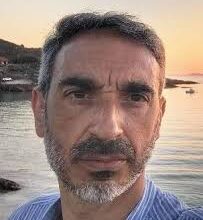
Luis Sánchez Alvarez
Head of Sector, Research and Innovation, DG AGRI
Luis Sánchez Alvarez
Head of Sector, Research and Innovation, DG AGRILuis Sánchez is Head of Sector at DG AGRI (Agriculture and Rural Development), Unit F.2 ‘Research and Innovation’, European Commission. He joined DG AGRI in January 2023 and coordinates the EU Mission Soil team. Luis is Agricultural Engineer and holds a PhD in the field of water and nutrient management in arable crops. Before joining the European Commission in 2017 (DG Research and Innovation, European Innovation Council), he worked for almost 20 years in agricultural policy and R&I in the Madrid Regional Government in technical and senior management positions.
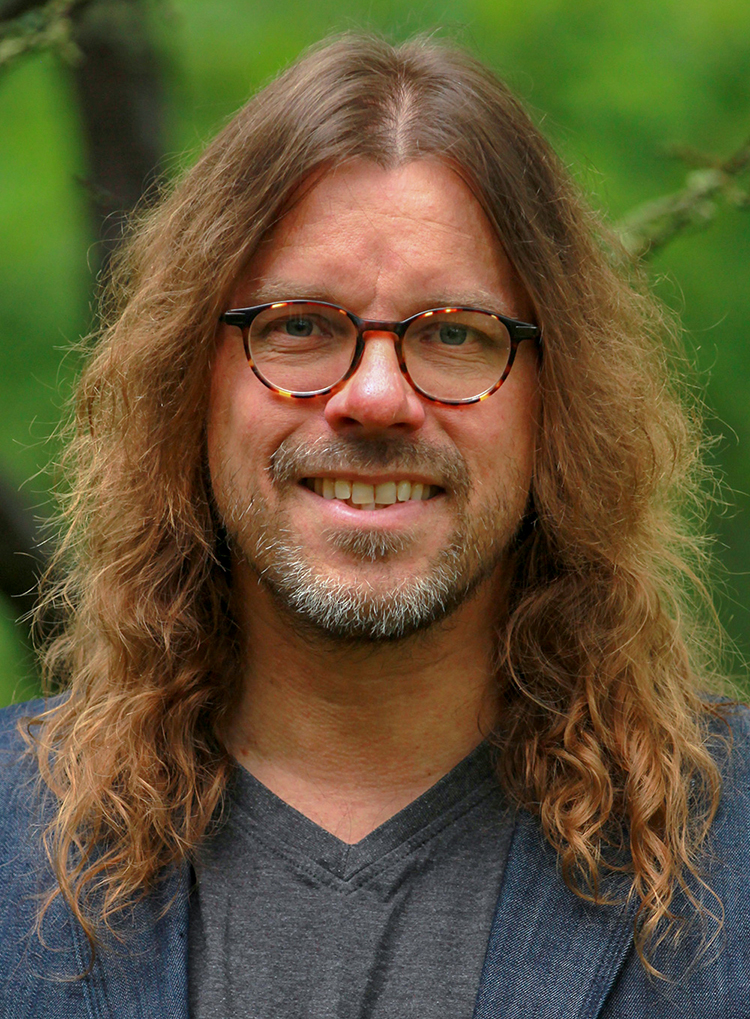
Teemu Santonen
Principal Lecturer, Laurea University of Applied Sciences
Teemu Santonen
Principal Lecturer, Laurea University of Applied SciencesDr Teemu Santonen holds a DSc (Econ.) degree in Information Systems Science. He has published over 90 scientific articles, including 25 focused on Living Lab methods, services, business models, innovation network orchestration, and case studies. Santonen has coordinated and participated in numerous international and national Living Lab and open innovation projects across various domains, including health and wellbeing, creative industries, circular economy and sustainability, pedagogical development, and forestry, agriculture, and fisheries. He has been an ENoLL Council member since 2022 and is co-leading ENoLL’s Harmonisation Working Group, which aims to reconcile differences and promote coherence in Living Lab practices. He also serves on the scientific panels of both ENoLL and the International Society for Professional Innovation Management (ISPIM), and is a former board member of the Finnish Strategic Management Society. Before his academic career, Santonen worked for over a decade as a development manager in leading Finnish financial, media, and ICT sector organisations.
Marta Martorell Camps
Director, Digital Society Technologies (DST) research group, i2CAT

Marta Martorell Camps
Director, Digital Society Technologies (DST) research group, i2CATMarta Martorell Camps is the director of the Digital Society Technologies (DST) research group at i2CAT and a member of the Board of the European Network of Living Labs (ENoLL). A specialist in digital social innovation, Living Labs, digital rights, and value-based impact assessment (Key Value Indicators – KVIs), she promotes ethical, inclusive, and people-centered approaches to digital transformation. She leads European and international projects related to the digital and green transition, socio-digital inclusion, international cooperation, and the development of open innovation ecosystems. She is a frequent speaker at international forums such as OpenLivingLab Days, the UN Science Summit, ISIRC, and the Smart City Expo World Congress. She is currently a PhD candidate in the Sustainability program at the Universitat Politècnica de Catalunya (UPC), where she researches methodologies for assessing the impact of social and digital innovation aimed at generating public and social value.
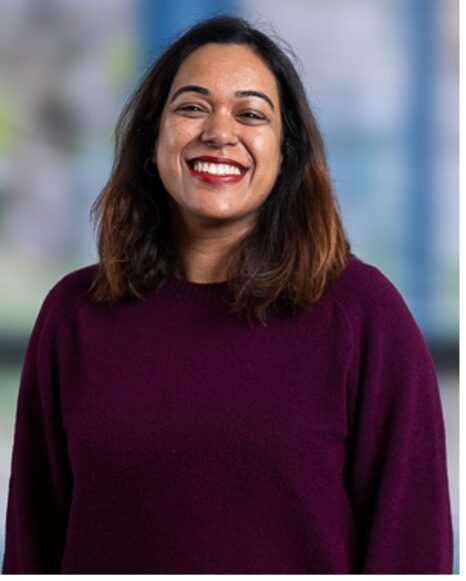
Aashna Mittal
Postdoctoral researcher at the Faculty of Technology, Policy and Management, TU Delft
Aashna Mittal
Postdoctoral researcher at the Faculty of Technology, Policy and Management, TU DelftAashna Mittal is a postdoctoral researcher at the Faculty of Technology, Policy and Management at TU Delft. Her work focuses on how diverse stakeholders learn, negotiate and make decisions together in complex water and climate-adaptation settings. Serious games are one of the tools she uses within this broader agenda. She is motivated by developing more structured, transparent approaches to designing such interventions and making evaluation in participatory settings more systematic and rigorous, so that it is possible to understand whether these interventions actually work—what participants take away, and whether their decisions shift.
Heleen Vreugdenhil
Expert Innovation Processes, DELTARES
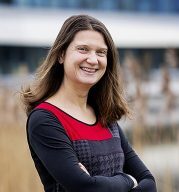
Heleen Vreugdenhil
Expert Innovation Processes, DELTARESDr. Heleen Vreugdenhil is an expert in innovation processes in water and environmental management. She earned her PhD from Delft University of Technology based on pilot projects in water management and specialises in designing, managing, and implementing innovations in complex multi-stakeholder settings such as river and coastal areas. Her work focuses on co-creation, knowledge management, and scaling innovations from pilot projects to full implementation and institutionalisation, with a strong emphasis on bridging science and policy to maximise impact. Her experience spans coastal restoration, river management, sustainable ports, offshore wind farms, nature-based solutions (NbS), business models for water landscapes, and operational river management pilots. She has led and supported projects on financing and institutionalising NbS, sustainability assessments, knowledge management, plastic removal, erosion prevention, and automated monitoring. Heleen holds a dual appointment at Deltares and TU Delft, connecting academic research with practical implementation. She teaches the Master’s course Building with Nature and Beyond and supervises PhD and MSc students. She is also active in the Netherlands Centre of River Studies (NCR), the European Network of Living Labs (ENoLL), and serves on the editorial team of the International Journal of Water Governance. Her ambition is to strengthen collaboration between academia and practice to increase the impact of innovation in water management.