Heleen Vreugdenhil
Expert Innovation Processes, DELTARES
Heleen Vreugdenhil
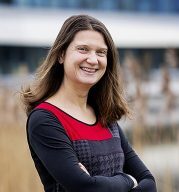
Expert Innovation Processes, DELTARESDr. Heleen Vreugdenhil is an expert in innovation processes in water and environmental management. She earned her PhD from Delft University of Technology based on pilot projects in water management and specialises in designing, managing, and implementing innovations in complex multi-stakeholder settings such as river and coastal areas. Her work focuses on co-creation, knowledge management, and scaling innovations from pilot projects to full implementation and institutionalisation, with a strong emphasis on bridging science and policy to maximise impact. Her experience spans coastal restoration, river management, sustainable ports, offshore wind farms, nature-based solutions (NbS), business models for water landscapes, and operational river management pilots. She has led and supported projects on financing and institutionalising NbS, sustainability assessments, knowledge management, plastic removal, erosion prevention, and automated monitoring. Heleen holds a dual appointment at Deltares and TU Delft, connecting academic research with practical implementation. She teaches the Master’s course Building with Nature and Beyond and supervises PhD and MSc students. She is also active in the Netherlands Centre of River Studies (NCR), the European Network of Living Labs (ENoLL), and serves on the editorial team of the International Journal of Water Governance. Her ambition is to strengthen collaboration between academia and practice to increase the impact of innovation in water management.
Fotios Konstantinidis
Coordinator, Olivestone Living Lab

Fotios Konstantinidis
Coordinator, Olivestone Living LabDr Fotios K. Konstantinidis works at the intersection of advanced technology, rural regeneration and real-world experimentation. He holds a PhD in Smart Manufacturing, an MSc in Mechatronics and Systems Automation, and an MEng in Electrical and Computer Engineering. As Coordinator of Olivestone Living Lab in Central Tzoumerka, Greece, he is shaping a 7+1 model connecting agritourism, stone buildings, olive cultivation, river ecology, heritage landscapes, walking routes and forest resilience. Its shared backbone supports co-creation, data stewardship, safety, learning and evaluation. Fotios is also Division Leader for Intelligent Industrial Manufacturing Systems at the I-SENSE Group of ICCS. He directs more than 20 researchers, engineers and project managers across various European projects, driving the journey from idea to product through design, prototyping, validation, demonstration and launch. At CogniSensus, he leads selected technologies towards commercial application. His experience brings scientific rigour, product thinking and ecosystem leadership to the rural setting. Expertise in artificial intelligence, sensing, robotics, immersive environments and data systems supports practical pilots grounded in local priorities. His participation in the European Commission’s Industry 5.0 Community of Practice and alignment with the New European Bauhaus reinforce a human-centred, resilient and inclusive approach. With more than 1,000 research citations, Fotios brings recognised academic expertise and real-world delivery experience to OLLD26, where he presents a practical pathway for regenerative rural transformation.
Feliciana Catino
Data Scientist and PhD Candidate in Computer Science and Mathematics
Feliciana Catino
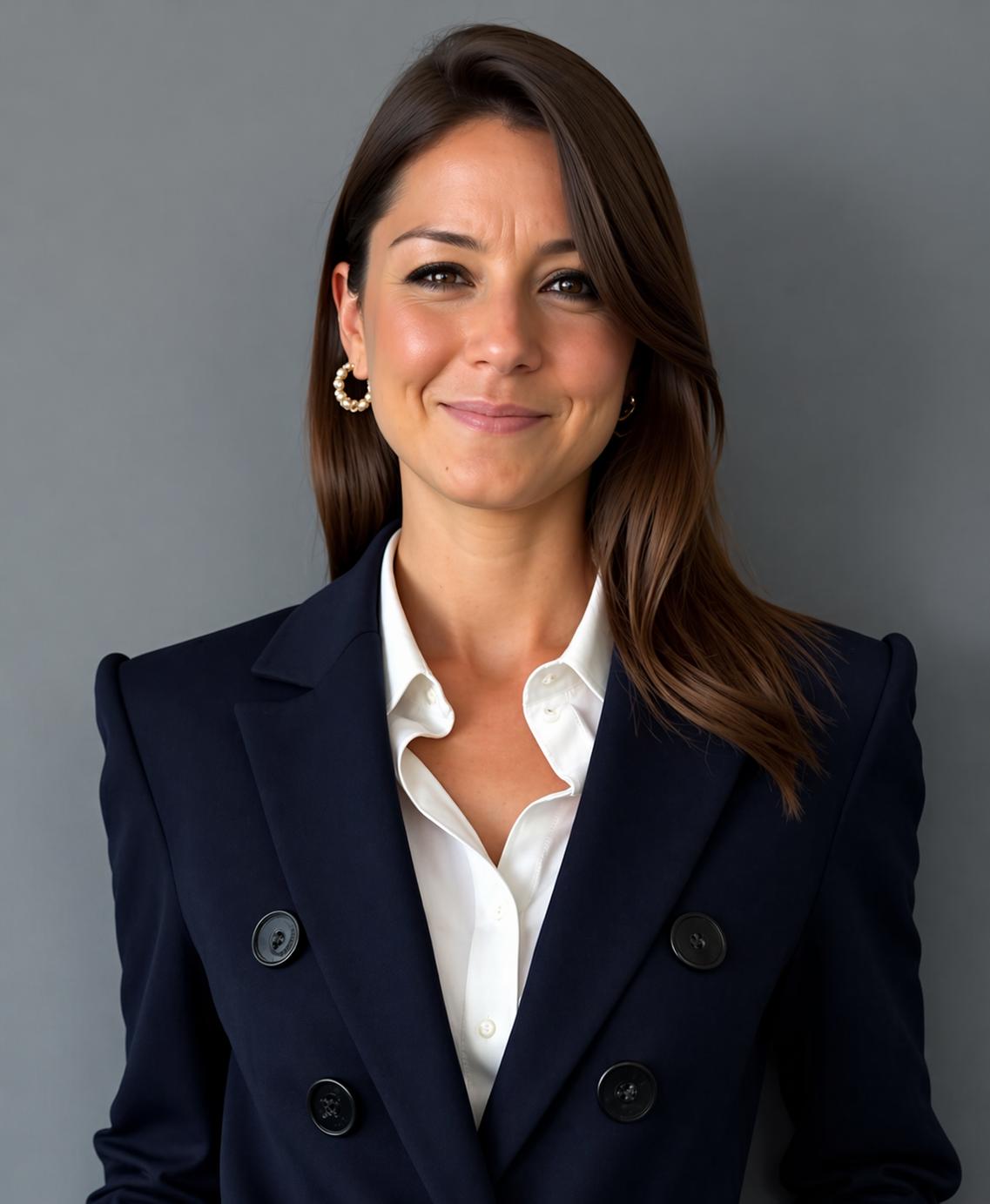
Data Scientist and PhD Candidate in Computer Science and MathematicsFeliciana Catino is a Data Scientist and PhD Candidate in Computer Science and Mathematics at the University of Bari Aldo Moro, where her research focuses on artificial intelligence, medical imaging and multimodal biomarker discovery for the early detection of dementia and other neurocognitive diseases. She serves as Project Officer for the CALLIOPE – House of Emerging Technologies at the Department of Innovation and Smart City of the Municipality of Taranto and is a member of the Inter-institutional Centre for Urban Health, established by the Municipality of Taranto, the Local Health Authority of Taranto and ARPA Puglia. The Centre hosts CALLIOPE – One Health Open Innovation Living Lab Taranto, an accredited member of the European Network of Living Labs. Working at the intersection of public administration, research and open innovation, she contributes to the coordination of interdisciplinary programmes addressing the relationships between environment, urban living and population health through advanced AI and data-driven methods. Her activities include environmental biomonitoring and the prevention of biopsychosocial frailty, developed through collaboration among public authorities, healthcare organisations, citizens and national and international research institutions. Her publications and conference contributions cover AI-enabled health research, healthy ageing, environmental epidemiology, sustainable urban development and explainable machine-learning applications.
Eleni Toli
Research associate and Senior Project Manager, Athena RC
Eleni Toli
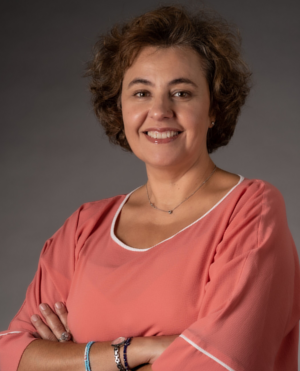
Research associate and Senior Project Manager, Athena RCEleni Toli is a research associate and Senior Project Manager at the Athena RC, at the Department of Informatics and Telecommunications at the University of Athens, and the Athens University of Economics and Business. She is a member of AE4RIA, the Alliance of Excellence for Research and Innovation on Αephoria (https://ae4ria.org/). She has been involved in the scientific and technical coordination of several EU-funded projects related to Open Science and Open Data, European Open Science Cloud (EOSC), Research Data Infrastructures, Data Repositories and Digital Social Innovation. She has been working on methodologies for specifications and requirements elicitation for the development of ICT solutions and on tools for stakeholder engagement. Eleni is the manager of the Innovative Systems for Sustainable Development & Action Living Lab (ISSIDA-LL).
Juliette Focki
Designer & PhD student

Juliette Focki
Designer & PhD studentJuliette Focki is a designer and a 2nd year PhD student working on bioregional design. She is affiliated with the ERPI Laboratory (Université de Lorraine) and the CRD (ENS Paris-Saclay/ ENSCI les Ateliers). A graduate of École Boulle (Paris) and ENSAD Nancy, she carries out her research-action at La Vigotte Lab, a rural third place located in the Parc Naturel Régional des Ballons des Vosges (France - 88). She develops bioregional design as a framework where the designer acts as a reinhabitant, someone who commits to and is shaped by a place, rather than simply intervening in it.
Stefania Savva
Director of Research & Development, The Hub Nicosia

Stefania Savva
Director of Research & Development, The Hub NicosiaDr Stefania Savva is a Belgium-based interdisciplinary researcher and Director of Research at SYNTHESIS Center for Research and Education, a VET accredited research institution, and The Hub Nicosia, a non profit educational NGO. She holds a Postdoc in museum-school sustainable synergies (cofunded by the EU and the Cyprus Research Foundation under DIDAKTOR programme, 2020), a PhD in Museum, Gallery and Heritage Studies (University of Leicester, 2016), an MA in Art, Craft and Design Education (Roehampton, 2009), and a BA in Primary Education (Aristotle University of Thessaloniki, 2008). Her research spans inclusive education, cultural heritage education, digital pedagogy, social innovation and design for social change. Her doctoral work on museum–school partnerships and multiliteracies led to frameworks including Museum Multiliteracies Practice, the Living Museum Partnership and Multiliteracies Performance Assessment Zones. She later introduced Entrepreneurial Cultural Affinity Spaces. Recent work covers inclusive STEM education, disability inclusion in the GLAM sector, living labs for participatory action research and civic engagement, sustainability education and post-digital cultural futures for gender equality and empowerment. She has independently authored more than ten successfully funded European research proposals.
Lisandra Otero Borges
PhD Candidate, Universidad Carlos III de Madrid

Lisandra Otero Borges
PhD Candidate, Universidad Carlos III de MadridLisandra is a Ph.D. Candidate in Documentation at Universidad Carlos III de Madrid, funded by a pre-doctoral research scholarship from the Community of Madrid. Her doctoral research focuses on GIS-based services in European academic libraries and Spatial Humanities. She holds a Master's degree in Documentation, Libraries, and Archives from the University of Alcalá and a Bachelor's degree in Information Sciences from the University of Havana, where she graduated with honors. She has prior experience as a university lecturer at the University of Havana and as an information architecture and UX consultant. She is currently a member of the Acrópolis research group at Universidad Carlos III de Madrid, with broader research interests spanning geospatial data management, user experience, and digital humanities infrastructure.