Fatima Canseco
Head of Research, Digital Society Technologies at i2CAT Foundation

Fatima Canseco
Head of Research, Digital Society Technologies at i2CAT FoundationFàtima Canseco-López is Head of Research of the Digital Society Technologies Research Group at the i2CAT Foundation. She holds PhDs in Social Innovation (La Salle-URL) and Electrical Engineering (BIU), as well as degrees in Engineering Management (MEng), Industrial Engineering (BEng), and an MBA (UPC). Her experience spans academia and public administration, including roles at La Salle–URL, UPC, and the Traffic Control Centre of Catalonia. Her work focuses on the intersection of social innovation, digital transformation, and technology governance.
Dimitri Schuurman
Senior Research Strategist, ENoLL

Dimitri Schuurman
Senior Research Strategist, ENoLLDimitri is a university business developer at research group imec-MICT-Ghent University where he is responsible for research on inclusive design, impact via Living Labs, and futures studies, all in the context of emerging technologies. He is a visiting professor of strategic design and innovation management at Ghent University and works part-time for the European Network of Living Labs as Senior Research Strategist. His PhD on innovation management in Living Labs developed a three-layered model that is widely used in Living Lab research and practice. Finally, Dimitri is active as an independent consultant in open innovation, user innovation and strategic innovation management.
Koen Vervoort
Senior Stakeholder Strategist, ENoLL

Koen Vervoort
Senior Stakeholder Strategist, ENoLLHelping Living Labs since 2006 @i-City, IBBT, iMinds, City of Thing, iMec as Stakeholder engagement specialist and now as a Senior Stakeholder Strategist at ENoLL, building bridges and opportunities for all members and interested parties. With nearby 20 years of experience in User Involvement, Panel Management and Stakeholder Engagement, Koen is constantly trying to strengthen the Living Lab community around the globe.
Marta Martorell Camps
Director, Digital Society Technologies (DST) research group, i2CAT

Marta Martorell Camps
Director, Digital Society Technologies (DST) research group, i2CATMarta Martorell Camps is the director of the Digital Society Technologies (DST) research group at i2CAT and a member of the Board of the European Network of Living Labs (ENoLL). A specialist in digital social innovation, Living Labs, digital rights, and value-based impact assessment (Key Value Indicators – KVIs), she promotes ethical, inclusive, and people-centered approaches to digital transformation. She leads European and international projects related to the digital and green transition, socio-digital inclusion, international cooperation, and the development of open innovation ecosystems. She is a frequent speaker at international forums such as OpenLivingLab Days, the UN Science Summit, ISIRC, and the Smart City Expo World Congress. She is currently a PhD candidate in the Sustainability program at the Universitat Politècnica de Catalunya (UPC), where she researches methodologies for assessing the impact of social and digital innovation aimed at generating public and social value.
Dr. Abdolrasoul (Rasoul) Habibipour
Associate Professor in Information Systems, Luleå University of Technology, Sweden, and Managing Director of Botnia Living Lab

Dr. Abdolrasoul (Rasoul) Habibipour
Associate Professor in Information Systems, Luleå University of Technology, Sweden, and Managing Director of Botnia Living LabDr. Abdolrasoul (Rasoul) Habibipour is Associate Professor in Information Systems at Luleå University of Technology, Sweden, and Managing Director of Botnia Living Lab and educational program leader at LTU. His research focuses on participatory design, user engagement, co-creation, and Living Labs, with a particular interest in ethics, responsibility, and inclusive innovation. Rasoul has led and contributed to several international research and innovation projects and has extensive experience in developing and studying innovations in real-life settings.
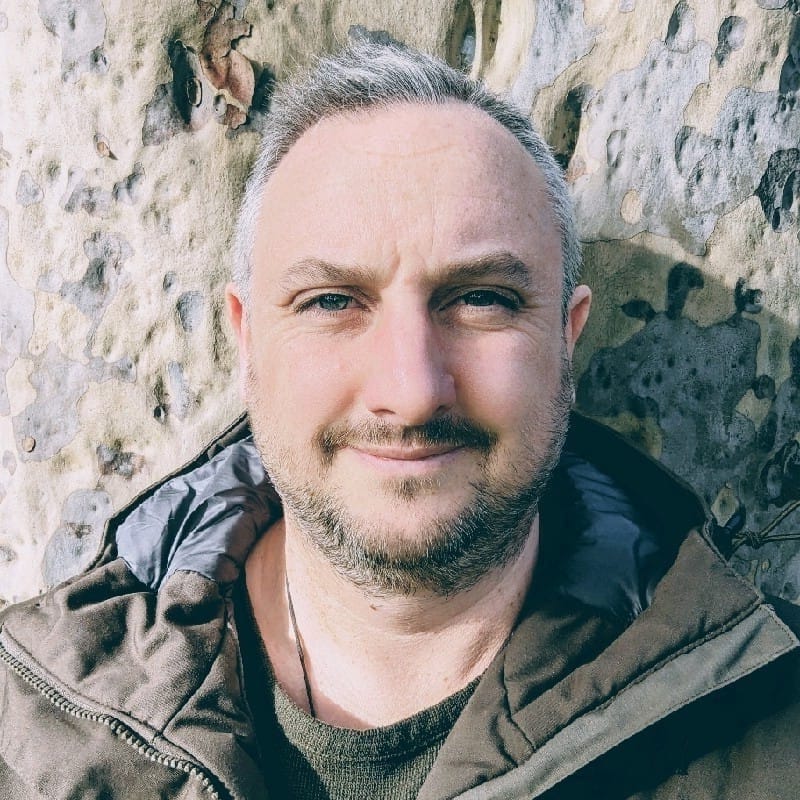
Sam Rye
Senior Research Officer, Monash University
Sam Rye
Senior Research Officer, Monash UniversitySam leads Monash University's Living Lab Infrastructure. Working with Living Labs across the university, he works with academics to integrate education, research, campus operations, industry and community engagement. With a background in strategic and systemic design, participatory processes, knowledge translation and with 15+ years supporting cross-sectoral collective action through the likes of social innovation labs, Sam aims to further grow Monash University's capability and supporting structures to tackle the Grand Challenges of our age.
Vicky Van der Auwera
Research Manager, LiCalab

Vicky Van der Auwera
Research Manager, LiCalabVicky holds a Master’s degree in Engineering Sciences from Brussels University Belgium, where she graduated as civil mechanical-electrical engineer and worked several years in private sector in the area of machine design and construction. Since 2012, she is Research Manager and co-founder of LiCalab (Living and Care lab), responsible for day-to-day management and strategy. Vicky has an extensive experience in leading cross border projects and activities with EU living labs (e. g. H2020 Vitalise-project, Horizon Europe DiCE-project, Interreg CrossCare-project.) LiCalab is an effective member of the European Network of Living Labs (ENoLL) and is member of the Living Lab Harmonization Working Group, that focuses on harmonising and standardising the methods and tools used by Living Labs.
Leon Cruickshank
Professor of Design and Creative Exchange at Lancaster University
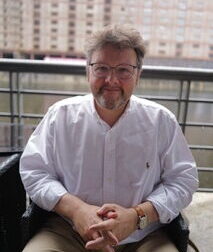
Leon Cruickshank
Professor of Design and Creative Exchange at Lancaster UniversityLeon Cruickshank is Professor of Design and Creative Exchange at Lancaster University. His research focuses on open, co-design processes and understanding and amplifying the impact of these living projects. These range from the £1.2 million Leapfrog project looking at new forms of engagement and mapping impact to Born Into Care, a codesign project to map the process whereby babies are taken into the care system and separated from their parent(s) at birth. He is the President of the European Academy of Design and his latest co-edited book ‘Flourish By Design’ published by Routledge and available as an open access publication here - https://doi.org/10.4324/9781003399568, https://orcid.org/0000-0002-9145-4635