Marisa Kappeler-Schudel
Head of Smart City and Sustainable Development, City of Winterthur

Marisa Kappeler-Schudel
Head of Smart City and Sustainable Development, City of Winterthur
Marisa Kappeler-Schudel is Head of Smart City and Sustainable Development at the City of Winterthur, where she leads a multidisciplinary team working at the intersection of innovation, sustainability and data analytics. She is responsible for advancing the city’s Smart City strategy, shaping its data strategy and developing tools for sustainable development.
Previously she worked as a public sector consultant at Deloitte and as a researcher and lecturer at the Zurich University of Applied Sciences. Marisa also serves on the Board of Directors of Suisseplan Ingenieure AG and is a member of Zurich’s City Parliament.
She holds an MSc in International Affairs and Governance from the University of St. Gallen.
Alain Renk
Co-founder, Open Urbanism Foundation

Alain Renk
Co-founder, Open Urbanism Foundation
Alain Renk is Co-founder of the Open Urbanism Foundation. He is an architect and urban planner, co-author of the principles of open urbanism, author of the book “Building the Complex City?” and Research Director at the Foundation’s Lab.
A pioneer of open-source civic tech for participatory urbanism through Unlimited Cities and Urban Dash, he acts as Coordinator of the European multinational research project Multigination. He is also co-founder of the Swiss umbrella organisation for participation, Director of the Foundation’s studio for operational projects, and an associate partner of UN-Habitat’s World Urban Campaign.
He won the favourite European Participation Award 2025 for the Libellule Vernier project.
Vicente Carabias
Deputy Head of the Institute of Sustainable Development, ZHAW Zurich University of Applied Sciences
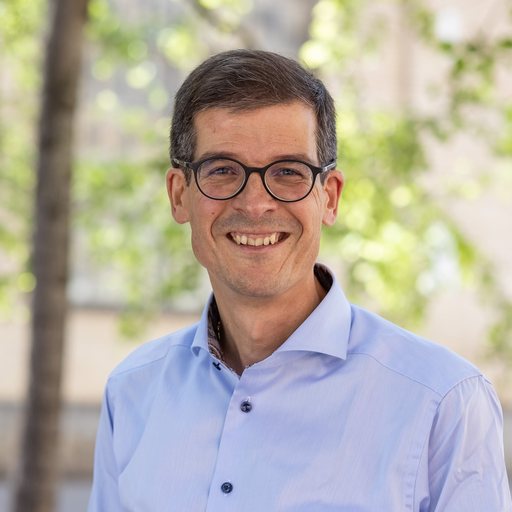
Vicente Carabias
Deputy Head of the Institute of Sustainable Development, ZHAW Zurich University of Applied Sciences
Prof. Vicente Carabias is Deputy Head of the Institute of Sustainable Development at ZHAW Zurich University of Applied Sciences, where he coordinates the Sustainable Energy Systems and Smart Cities research group. He also coordinates the ZHAW Platform Smart Cities and Regions, supporting the implementation of smart sustainable cities.
Since completing his MSc in Environmental Sciences at ETHZ in 1996, he has been involved in sustainability research, services and teaching at ZHAW.
From 2019 he has supported the transformation of the City of Winterthur part-time as Smart City Responsible and WinLab Manager, in charge of the Urban Living Lab of the City of Winterthur, enabling the systematic testing of social and technological innovations and acting as the contact person for WinLab collaborations in applied research and innovation development.
Ruth Carrasco-Gallego
Associate Dean for Sustainable Transformation, School of Industrial Engineering, Universidad Politécnica de Madrid
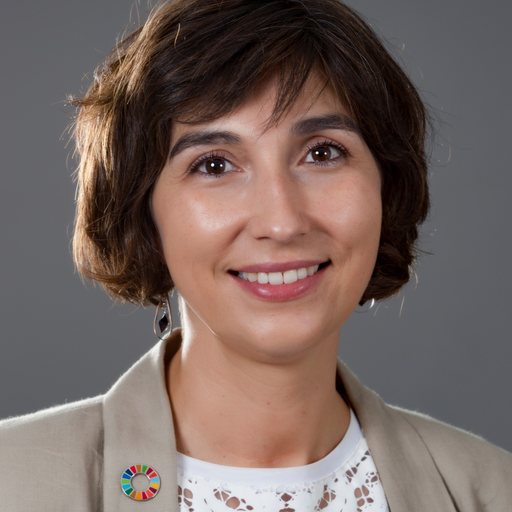
Ruth Carrasco-Gallego
Associate Dean for Sustainable Transformation, School of Industrial Engineering, Universidad Politécnica de Madrid
Dr Ruth Carrasco-Gallego is Associate Dean for Sustainable Transformation at the School of Industrial Engineering of the Universidad Politécnica de Madrid (UPM) and Director of the Madrid Region and UPM Chair on Circular Economy. With more than 20 years of professional experience, she combines an industrial background in manufacturing supply chains with nearly two decades of academic work in research, education and cross-sector innovation.
Her work focuses on sustainable and circular supply chains, industrial ecosystems, environmental and social indicators, and multi-stakeholder collaboration for systemic change. She leads The Regenerative Campus, the EELISA European University Living Lab for Circular Economy, where industry, researchers, students, public institutions and citizens co-create, prototype and scale sustainability solutions in real-world settings.
Hanna-Greta Puurtinen
Head of RDI, School of Built Environment and Bioeconomy, and Senior Specialist, Project Management Office, Tampere University of Applied Sciences

Hanna-Greta Puurtinen
Head of RDI, School of Built Environment and Bioeconomy, and Senior Specialist, Project Management Office, Tampere University of Applied Sciences
Hanna-Greta Puurtinen has worked at Tampere University of Applied Sciences (TAMK), Finland, since 2006. She received her Master of Science and Licentiate of Technology degrees in Biomedical Engineering from Tampere University of Technology in 2000 and 2002, and graduated as Master of Arts, majoring in German Philology, International Relations and French, from the University of Tampere in 1998.
She currently holds two positions at TAMK: Head of Research, Development and Innovation at the School of Built Environment and Bioeconomy, and Senior Specialist at the Project Management Office. She has 25 years of work experience across international scientific and applied research and innovation.
Her work focuses on EU policy frameworks and European and national project funding instruments such as Horizon Europe. She has represented TAMK Living Lab in the ENoLL Council since 2019.
Ömer Onur
Managing Director, Başakşehir Living Lab
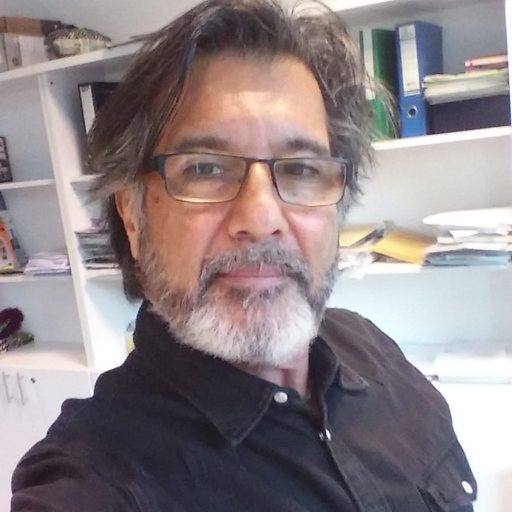
Ömer Onur
Managing Director, Başakşehir Living Lab
Ömer Onur is Managing Director of Başakşehir Living Lab and has been running the Başakşehir Innovation and Technology Center since 2012, focused on the development of innovative products and services as well as supporting entrepreneurs and startups. He is also Project Coordinator of Başakşehir Municipality for Horizon Europe projects, and has been a trainer in ENoLL Learning Lab sessions on various topics since 2020.
Beyond Başakşehir Living Lab, Ömer is an angel investor and, as of February 2024, Chairperson of Angel Effect Pty Co, an angel investment fund based in Istanbul with 25 shareholders.
He is an expert in project management and organisational development, with more than 30 years of corporate experience at Ford Motor Company, Ericsson and Turkcell Communications. He holds a BSc in Production and Industrial Engineering from Aston University and an MBA from the Graduate School of Management, Melbourne University.
Valentino Piana
Senior Climate Strategist, ENoLL
Valentino Piana
Senior Climate Strategist, ENoLL
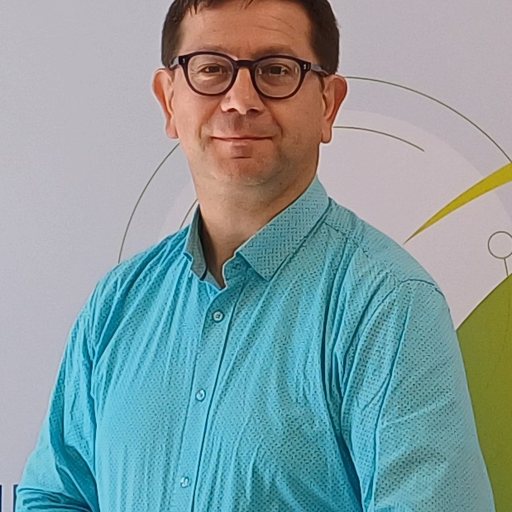
Valentino Piana is the ENoLL Senior Climate Strategist, assisting the Network and its Members in strategies for mitigation, adaptation and global impact. An IPCC reviewer of the Special Report on Cities and Climate Change, he is an evolutionary economist and consultant.
After graduating from Bocconi University in Milan in 1994, he taught macroeconomics and microeconomics at the University of Economics in Cracow. From 2000 to 2008 he was a senior consultant at a strategic consulting boutique firm in Rome, and since 2000 he has led the Economics Web Institute.
He is a member of the EU Zero Pollution Stakeholder Platform and co-facilitator of several working groups at the UNECE Informal Task Force on E-Mobility. At Factual Consulting he leads a DUT project on reimagining parking spaces, and at the Urban Lab of the Open Urbanism Foundation he supports economic strategies to implement the outcomes of participatory processes.
Maria Lina Yeroyanni
Senior Expert for the policy R&I agenda 'Innovating Cities', DG R&I, European Commission
Maria Lina Yeroyanni
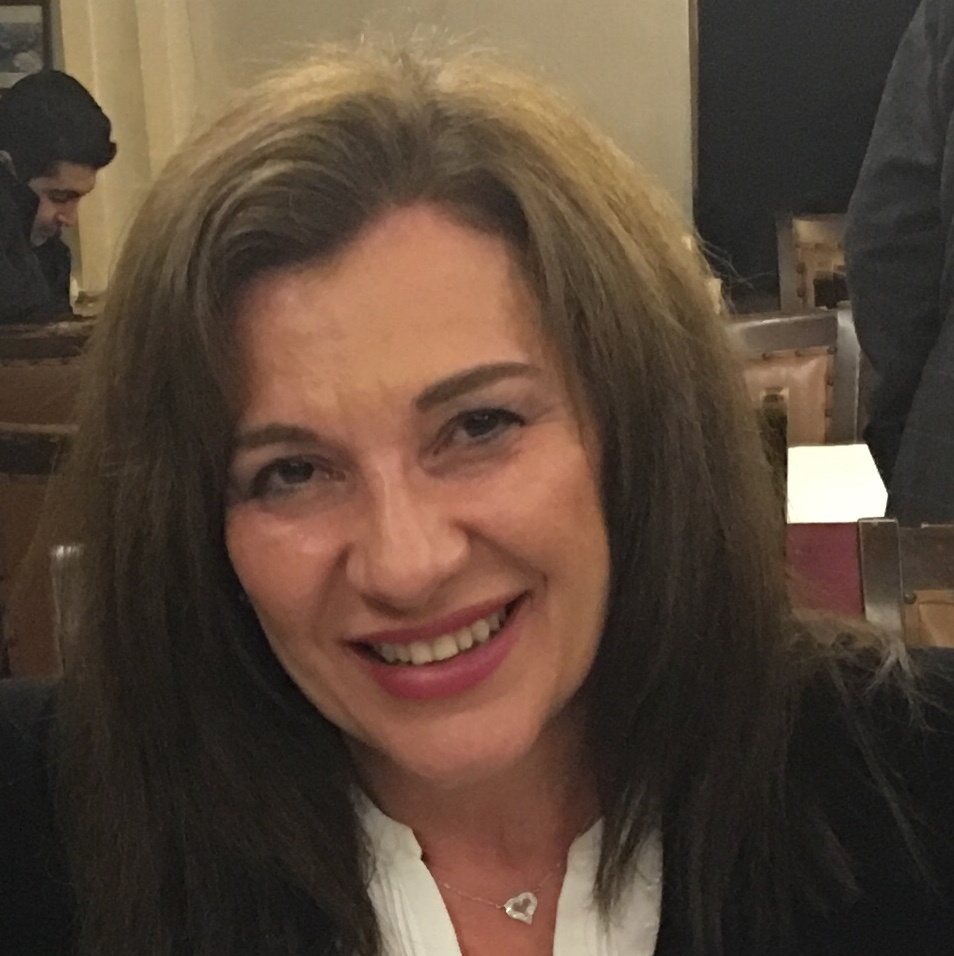
Senior Expert for the policy R&I agenda 'Innovating Cities', DG R&I, European CommissionSenior Expert for the policy R&I agenda ' Innovating Cities', working since 26 years in the European Commission, DG Research and Innovation. Dealt with Disaster Risks, Earthquake resistant constructions, construction sector, Land-use management, Desertification and Land Degradation, Urban metabolism, Renaturing Cities. Since 2014, Senior Expert for the policy R&I agenda on 'Innovating Cities' focusing on Sustainable Urban development, member of the editorial Board of the Commission Web site ' One Stop Shop for cities- Topic Page', coordinator of the intra-RTD group of officials working on urban issues ( Innovating cities with systemic solutions, nature-based at the intersection of digital, technological, social etc.) to tackle issues of energy efficiency, urban mobility, health and well-being, social innovation, climate change and adaptation, urban coastal management, urban resilience, urban metabolism, urban waste, social innovation, circular economy.