DATE & TIME
1 October 2026, 15:45 – 17:15
ROOM
Peacock 1
TRACKS
TRACK 2: Living Labs for Policies, Governance, Collaboration and Innovation Ecosystems
TRACK 5: Living Labs Operations, Methods, Tools, and Impact
Description
The IPLL (Invisible Patterns in Living Labs) workshop offers an experiential approach to identifying cross-cutting dynamic patterns present in various contexts (nature, organizations, individuals, social systems).
Through a collaborative card-based game, participants explore, compare, and connect these dynamics to better understand the underlying mechanisms that structure collective innovation processes.
Agenda
| Time | Item |
|---|---|
| 15:45 – 15:55 |
Brief Introductions of Participants Context: complexity of Living Labs, difficulty in structuring them. Open question: “Why do initiatives rich in stakeholders and ideas sometimes produce few results?” Objective: “to create a level of cognitive engagement” |
| 15:55 – 16:05 |
Card Distribution & Immersion Distribution of cards (participants + possible audience). Each card = a concrete situation. Instructions: “You have a situation. Your objective is to understand how it works, without trying to categorize it immediately.” |
| 16:05 – 16:20 |
Free Exploration Participants circulate: free exchange, comparison of situations, identification of similarities. Objective: to elicit insights, to create movement and interaction. |
| 16:20 – 16:35 |
Grouping by Similarity Participants must group together: “Form groups of situations that, in your opinion, function in the same way.” Result: emergence of clusters, beginning of spontaneous structuring. |
| 16:35 – 16:55 |
Gradual Revelation of Patterns The facilitator introduces the patterns one by one. Examples: congestion, propagation, regulation, saturation, bifurcation, emergence, oscillation, misalignment. For each pattern: the groups involved express themselves, they explain their reasoning, group discussion. Key moment: realization that different systems are based on the same dynamics. |
| 16:55 – 17:05 |
Living Labs Perspective Transition: “What if these dynamics are also those you observe in your projects?” Discussion: identification within their contexts, connection to their practices. |
| 17:05 – 17:15 |
In-Depth Exploration Subgroup work: each group chooses a pattern. Addresses: Where does it appear in your context? What effects does it produce? How could it be better managed? |
| 17:15 – 17:25 |
Debrief & Synthesis Group discussion: what was surprising, what makes sense, what is transferable. Final message: “Problems are not always different. They are often the same dynamics, in different contexts.” |
Facilitators
Paméla Magotte
Board Member, La Fabrique du Futur
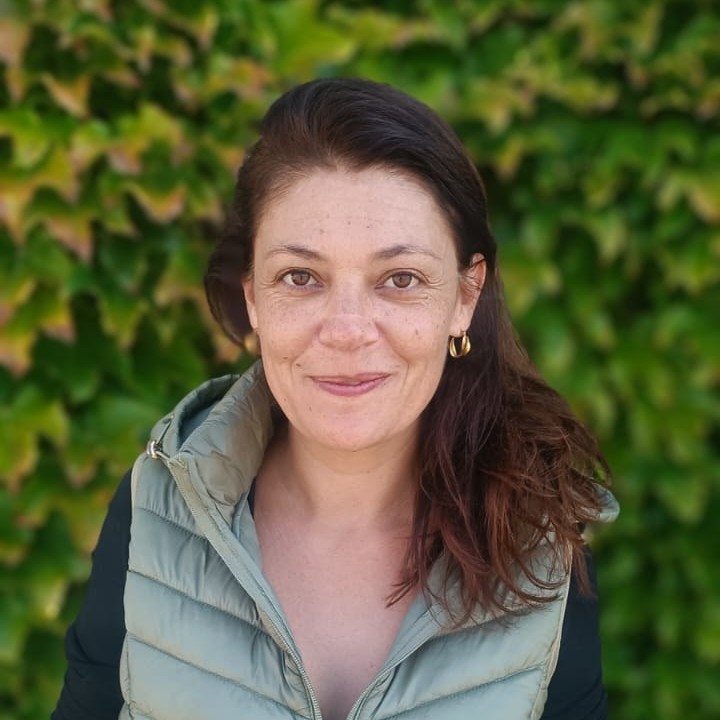
Paméla Magotte
Board Member, La Fabrique du FuturPaméla Magotte is an independent researcher and founder of the Symbiote research programme, on the Board of La Fabrique du Futur. Following a burnout, she embarked on a journey to understand her own cognitive mechanisms and certain experiences that could not be satisfactorily explained within existing scientific frameworks. This led her to explore epistemology, the limits of complex systems modelling, and the identification of cross-domain dynamic invariants. Her work progressively resulted in the formalisation of an Organisational Computational Unit (OCU), a computational building block designed to represent the dynamics of organisation, regulation, and reconfiguration observed in living and complex systems. This approach opens new perspectives for simulation, decision support, and the design of more resilient systems in fields such as organisations (notably living labs), energy, materials science, critical infrastructures, and artificial intelligence.
Eric Seulliet
Founder, La Fabrique du Futur
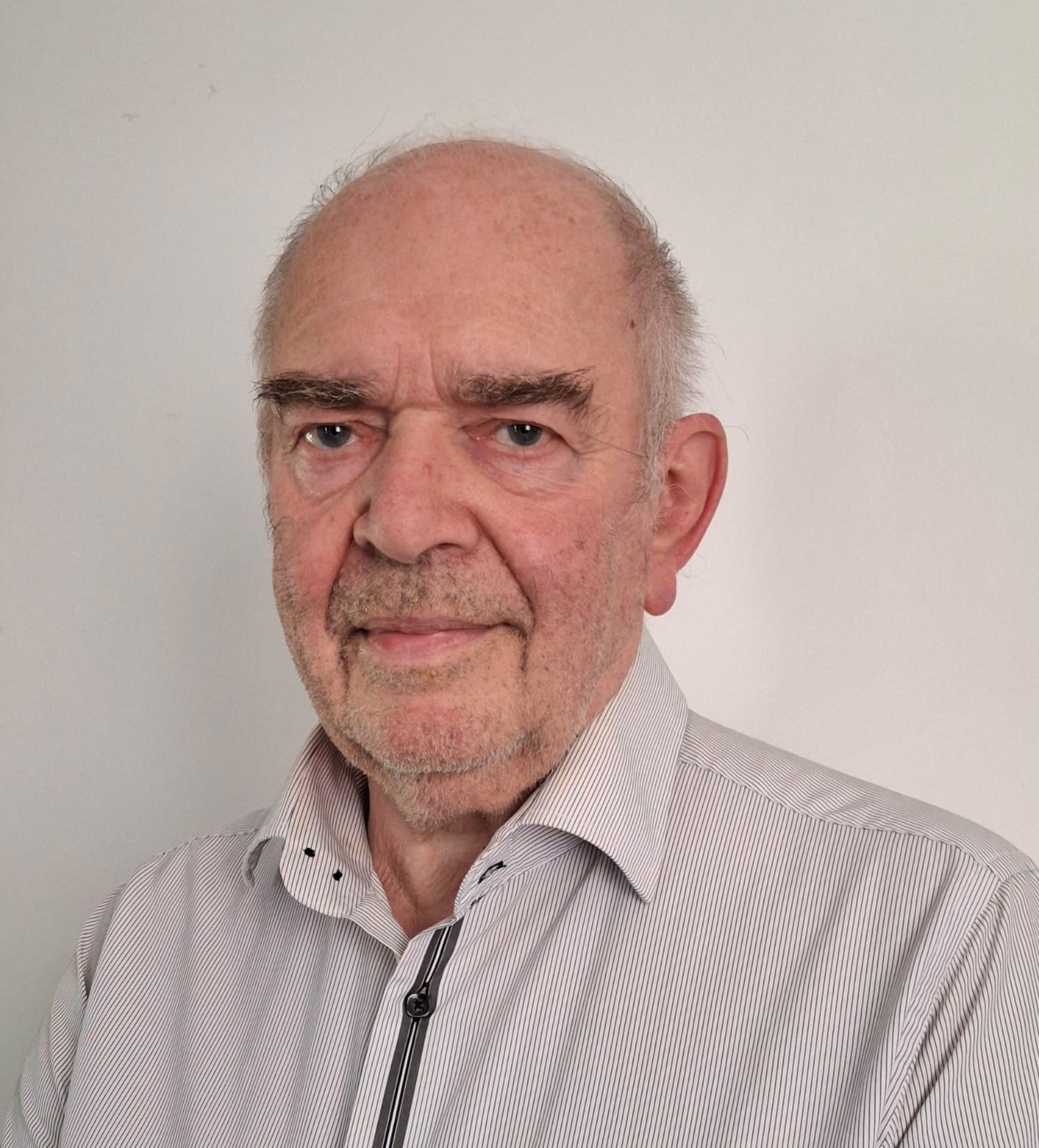
Eric Seulliet
Founder, La Fabrique du FuturEric Seulliet is a graduate of HEC Paris. He is the founder of La Fabrique du Futur, a think tank and innovation ecosystem created in 2006 to explore desirable futures, foster responsible innovation, and strengthen the dialogue between technological progress, societal transformation, and sustainable development. Recognized as a Living Lab by the European Network of Living Labs (ENoLL) since 2008, La Fabrique du Futur brings together companies, public organizations, researchers, entrepreneurs, and citizens to co-design and experiment with innovative solutions addressing major societal challenges. As an innovation strategist, facilitator, and coach, he supports organizations, entrepreneurs, and startups in the design of innovative projects, business models, and collaborative ecosystems. His work focuses particularly on the transformative potential of deep technologies, including artificial intelligence, blockchain, immersive technologies, virtual worlds, and emerging digital ecosystems. Today, within La Fabrique du Futur, Eric is leading the development of the Alliance of Manufacturers of the Future, an international ecosystem of impact makers, innovators, and changemakers committed to building more desirable, sustainable, and human-centered futures.