Sascha Vermeylen
Panel manager & Researcher, LiCalab

Sascha Vermeylen
Panel manager & Researcher, LiCalabSascha holds a Master’s degree in social economic sciences from University of Antwerp. Since 2018, she’s a panel manager and researcher at LiCalab (living and care lab) at Thomas More University of Applied Sciences in Belgium. LiCalab focuses on health technology and new collaborative models in health by applying user-centric research. Sascha manages the LiCalab panel and maintains the panel database, following GDPR. This panel consists of ca 1.500 elderly and over 600 caregivers and care organizations. In addition, she is responsible for the operational side of the living lab activities, such as setting up co-creation sessions, real life testing, human factor studies and surveys.
Benjamin Valcke
Project Manager, Stickydot
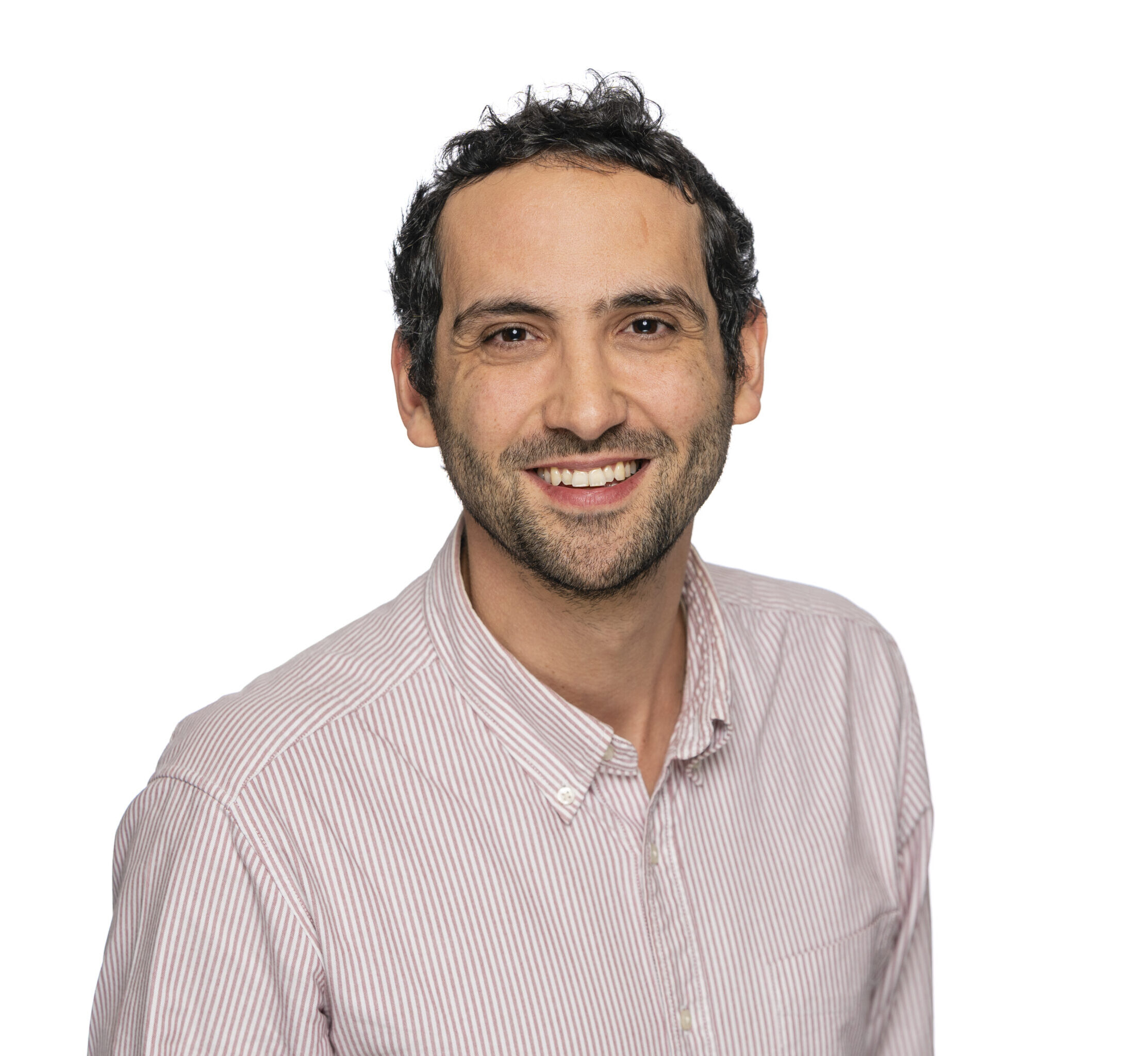
Benjamin Valcke
Project Manager, StickydotBenjamin is a project manager at Stickydot, where he leads and supports European initiatives on social innovation and community engagement. He holds a PhD in Urban Studies from the University of East Anglia, with a research focus on participatory approaches to community development in the social housing context. His work is grounded in the conviction that inclusive, citizen-led processes are essential to advancing social justice, ensuring that diverse perspectives are represented in decision-making, and shaping solutions that respond to collective needs. Among other projects, Benjamin works for the Horizon Europe project LEVERS, in which Stickydot is a partner. LEVERS seeks to shape a just and sustainable Europe through inclusive learning and transformative action. Within this framework, he will present a case study from Brussels, showcasing an innovative community-based learning ecosystem that engages teenagers in climate justice through co-creation.
Claire Planchat
Researcher INRAE – UMR UNH & Territoires

Claire Planchat
Researcher INRAE – UMR UNH & TerritoiresClaire Planchat is a research fellow at INRAE, an associate researcher at UMR Territoires, and founder of the agency Vous Êtes D’Ici. For over 20 years, she has been developing expertise in engineering and action research for adaptive land management through the use of participatory, artistic, and educational tools. Her professional career has focused heavily on the development of facilitation tools (Art and Nature Project for the resident management of the Nazinga Ranch in Burkina Faso, 2000), dialogue and evaluation (2003-2004, geomatics specialist at the Auvergne Regional Council, 2019-2022 co-editor of the participatory master plan for the ENS Ecopôle du Val d'Allier), with a view to studying and proposing territorial management of natural and agricultural resources and intangible heritage (2004-2006, evaluation of landscape charters and environmental policies for the Auvergne Volcanoes Regional Nature Park, 2018-2023 pilot project Villages of the Future for the Bourgogne-Franche-Comté Region). Since 2008, Claire Planchat has contributed to various training modules at the National Schools of Architecture in Clermont-Ferrand, St-Etienne and Lyon, at AgroParistech, Clermont Auvergne University and CYCU University, College of Design (Taiwan) on the use of participatory tools to promote user expertise in the collaborative development of a territorial project.
Silvia Fierăscu
Lecturer Faculty of Governance and Communication Sciences, West University of Timisoara & Founder and Leader of Social Fabrics Research Lab

Silvia Fierăscu
Lecturer Faculty of Governance and Communication Sciences, West University of Timisoara & Founder and Leader of Social Fabrics Research LabSilvia Fierăscu, PhD, is a passionate professor, a global trainer, an interdisciplinary researcher, and an RDI consultant in Applied Network Science in Social and Communication Sciences, Organizational Development and Change Management. Her work reflects entirely who she is as a professional – a purpose-driven educator and changemaker. Her diverse experience working in all sectors - business, government, academia, and civil society – feeds into her vision of a global movement towards more data-driven, evidence-informed decision making, human-centric work cultures, sustainable ecosystems of wellbeing, value creation, and innovation. At West University of Timișoara, Silvia is a lecturer in data analysis at the Faculty of Governance and Communication Sciences, where she founded and leads Social Fabrics Research Lab - a research, development and innovation lab in social sciences and digital media.
Tilly Robinson-Miles
Lead Partner & Stakeholder engagement Living Good Food Nation Lab

Tilly Robinson-Miles
Lead Partner & Stakeholder engagement Living Good Food Nation LabTilly Robinson-Miles leads all partner and stakeholder engagement for the interdisciplinary, Welcome funded Living Good Food Nation Lab, working across sectors and parts of the food system to ensure partnership work is central to the Living Lab, the implementation of the Good Food Nation (Scotland) Act and wider food systems transformation. She is a Geographer with a BA in Human Geography and MA in Food Security and Food Justice from the University of Sheffield. She is a Fellow of the Royal Geographical Society and has over a decade of practical experience navigating the intersections between scale to practically achieve the Good Food Nation vision for all, including working within a council, in collaboration with Local Authorities and Health Boards, as a funder, trustee, researcher and leading a significant Covid-19 food access response.